Why Some Wounds Can Only Heal In Real Life

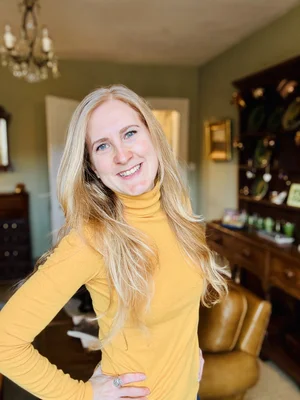
Photo by Elisha May
What My Brother's Death Taught Me About Money, Love, And The Wound That Heals Last
The thing the self-development industry will never tell you about why you're still stuck
I have spent years and thousands of pounds on mentors, coaches, healers, and programmes.
Some were brilliant. Some were mediocre. Some made promises they couldn't keep or deliver. And across all of them - the brilliant ones included - something remained stubbornly, confusingly unchanged.
The wound around love. The ceiling on money. The deep, persistent sense that no matter how much work I did, something at the root hadn't moved.
For a long time, I thought it was me. That I was too broken, too complex, too resistant. That I hadn't found the right mentor yet. That I needed to work harder, go deeper, invest more.
I was wrong. And understanding why has become one of the most important things I now bring to my own work.
The truth is this:
No mentor was ever going to heal what needed healing. Not because they weren't skilled. Not because the work wasn't real. But because what I needed to heal was never going to come from a coaching container.
It was always going to come from life and with the guidance of my own intuition.
What the self-development industry gets catastrophically wrong
The personal development world is built on a foundational assumption that most people never question:
That healing is an internal job. That if you do enough inner work - enough therapy, enough coaching, enough energy healing, enough nervous system work - you will eventually arrive at a place of wholeness from which you can then receive love, money, success, and everything else you've been working toward.
Heal yourself first. Then life delivers the goods.
It sounds reasonable. It's also, for a specific category of wound, completely wrong.
Because some wounds were not created internally. They were created in relationship, in circumstance, in the lived experience of loss and abandonment, and love disappearing. And wounds created in relationship and circumstance cannot complete their healing cycle through internal work alone.
They need reality to deliver the corrective experience.
And no mentor, however gifted, can be that.
Nathan
My brother Nathan died by suicide in 2012.
Before he died, money was never a significant problem for me. I earned well, I had savings, and I had an inheritance. Receiving wasn't an issue. Life felt, if not abundant, then at least adequate and flowing.
After he died, everything contracted. A relationship consumed my inheritance. My parents invested thousands in a business trying to help me find my footing with the partner at the time. And for years - more than a decade now - I have navigated a financial landscape that bears no resemblance to the woman I was before I lost him.
For a long time, I treated these as separate problems. The grief was the grief. The money was the money. The love was the love. I worked on all in isolation, with different mentors, different approaches, and different frameworks.
It took me years to understand they were the same wound.
Nathan was the most significant grounded, safe, and masculine presence in my life. Safe, steady, genuinely there for me in a way that almost no one else has been before or since. When he died, my nervous system didn't just process grief. It made an update. A deep, cellular, below-conscious update that said:
The masculine leaves. Love disappears. It is not safe to receive.
And because the nervous system doesn't distinguish between emotional receiving and financial receiving, because safety is safety and the same channel that opens to love opens to money - both contracted simultaneously.
I have worked with coaches hoping they would fix my money. I have worked with healers hoping they would fix my love life. And the most honest thing I can tell you is:
None of them could. Because neither the money nor the love was broken.
My nervous system was running an update written on the worst day of my life. And the only thing that overwrites that update is a new experience. In reality. In the body. Undeniable.
Why experiential wounds can only heal experientially
This is not just my personal theory. It is supported by decades of research in attachment science, trauma physiology, and nervous system biology.
The neuroscientist and trauma researcher Bessel van der Kolk, whose work has fundamentally changed how we understand trauma, established that traumatic experience is stored not in the narrative memory but in the body itself. His foundational work demonstrates that the body keeps the score - that what happened to you lives in your physiology, not just your psychology. And physiology does not update through insight. It updates through experience.
Similarly, the psychologist and attachment researcher Louis Cozolino has written extensively on what he calls the social synapse - the understanding that human nervous systems are not designed to heal in isolation. We are wired for co-regulation. We develop our sense of safety, our capacity to receive, our fundamental understanding of whether the world is trustworthy - all of it - in relationship with other people. Which means the wounds created in relationship must, at least in part, complete their healing in relationship.
This is the concept of the corrective relational experience - first introduced by the psychoanalysts Franz Alexander and Thomas French, and now foundational to modern attachment-based therapy. The idea is simple and profound: when a wound was created through a specific relational experience, healing requires a new relational experience that is different enough from the original to give the nervous system new evidence.
Not a better belief about the experience. Not a reframe of the narrative. A different experience. In reality. That the body can feel and the nervous system can register as new data.
No coach can give you that. No healer can manufacture it. No programme can deliver it.
Only life can.
What I can facilitate and what only real life can complete
This is where I need to make an important distinction - because it changes everything about how this work actually operates.
Not all wounds require real life to deliver the corrective experience. Many wounds - past traumas, historical patterns, old wounding that is complete as an event but incomplete in the body and energetic field - can metabolise fully within the right container. They don't need to be re-lived. They don't need the original circumstances to recur. They simply need to be met - fully, at the root, energetically and somatically - by someone who can hold the field while the system finally completes what it started, sometimes years or decades ago.
This is what I facilitate. The trauma doesn't need to happen again. It needs to finally finish moving through. And in the right container, with the right energetic field held around it, that completion can happen without real life needing to deliver anything new. I have sat with clients while decades-old wounding was finally discharged from their system - not because they re-lived the experience, but because, for the first time, their nervous system was held in a frequency that made completion safe.
What requires real life is different and more specific. It is the wound that is still open because the corrective experience hasn't happened yet. The wound around love leaving that cannot be completed until love actually stays. The wound around the masculine disappearing that cannot fully close until the masculine genuinely arrives and remains. These wounds can be prepared and brought to readiness within the container - metabolised to the point where the nervous system can finally receive the corrective experience rather than unconsciously blocking it - but they cannot be completed without real life delivering the final piece.
The distinction matters enormously. And being able to feel the difference between a wound that can complete within the container and one that is waiting for real life to deliver its resolution - that discernment is itself one of the rarest and most valuable things a practitioner can bring.
The three reasons your mentors couldn't heal this
Reason one: Your wounds were created experientially, not conceptually.
You cannot think your way out of a wound that was never created through thinking. The three-year-old who felt abandoned at the school gate didn't develop a limiting belief. She had a physiological experience of the bottom dropping out, and her nervous system took a snapshot of everything present in that moment and filed it as a threat template. Every subsequent experience of love leaving, of the masculine disappearing, has reinforced that template not through thought but through felt experience in the body.
Coaching works on the conceptual layer. Strategy, reframing, new beliefs, new identity. All genuinely valuable. None of it reaches the physiological layer where the original wound lives.
Reason two: You metabolise rather than process, which means standard containers are always incomplete.
Most coaching methodologies are designed for people who process experience. They take the insight, apply it, and move forward. The container delivers the concept, and the client implements it.
You don't work that way. You are wired - through your sensitivity, your clairsentience, your 3/5 Human Design profile built entirely around learning through lived experience - to go all the way through. To metabolise, not just process. Which means any container that delivers concepts without creating the conditions for full metabolising, integration, and embodiment will always feel incomplete to you. Not because you're resistant or difficult. Because you need the full cycle. And most containers only offer the first stage.
Reason three: Your deepest wound requires a specific external circumstance to complete.
This is the one nobody in the industry will tell you. Some wounds - specifically the ones created by significant relational loss - require a corrective relational experience to complete. Not a better framework for understanding them. Not a more skilled practitioner holding space for them. An actual lived experience that is different enough from the original wound to give the nervous system new evidence.
For me, that means love staying. An actual man. Present, consistent, choosing me repeatedly. Not as a concept. In reality.
No mentor can be that. No healing container can manufacture it. It requires life to deliver the specific circumstance the nervous system has been waiting for.
And until it does - until the masculine stays, until love proves itself permanent rather than temporary - a part of the wound remains physiologically open. Understood intellectually. Metabolised partially. But not complete.
Why this makes you harder to help - and why that's not a character flaw
If you recognise yourself in this, you may have spent years feeling like you were somehow the problem. That other people seemed to get results from the same programmes, the same coaches, the same approaches - and you didn't. That you were too complex, too wounded, too stuck in your patterns.
You weren't the problem.
You were someone whose specific wound required a specific circumstance that no coaching container could deliver. And you were trying to heal experiential wounds through conceptual means. That's not failure. That's a category error.
The wound is real. The work you've done has been real. The mentors who couldn't deliver the results they promised weren't necessarily frauds - they were working at the wrong layer with the wrong methodology for how you specifically heal.
Understanding this changes everything. Not because it removes the responsibility for your own healing - but because it directs that responsibility accurately. Toward the work that will actually move the needle. Toward creating the conditions for life to deliver the corrective experience. Toward becoming the woman who can receive it when it arrives.
Which brings me to the other side of this.
Why this is also exactly what makes your practitioner extraordinary
Here is the paradox at the heart of my work.
The thing that made me hardest to help - the fact that I metabolise rather than process, that my wounds are experiential rather than conceptual, that I needed reality to deliver what no coaching container could - is also the thing that makes me exceptionally effective at facilitating this level of healing in others.
Because I understand, from the inside, that transformation is not conceptual. I don't just teach the framework and expect clients to implement it. I hold the field while the lived experience moves through. I create the conditions for the wound to meet its corrective experience within a container that is activated, metabolising, and held at the energetic level most practitioners never reach.
Last year I worked with a client who carried a deep wound around men. Not a limiting belief about men - an experiential, physiological wound written by years of relational loss and disappointment. We didn't coach her through it intellectually. We held the container while reality delivered the corrective experience - and I facilitated the metabolising as it moved through her system all the way to completion.
She is now in a relationship with an extraordinary man.
That is not a coincidence. That is the Completion Cycle working at the level it's designed to work at. Metabolise. Integrate. Embody. With the right external circumstance meeting the prepared internal terrain.
The difference between my work and most coaching is this:
Most practitioners work on the wound from the outside.
I work with the wound from inside the experience itself -holding the energetic field, facilitating the metabolising, and creating the conditions for the corrective experience to complete what internal work alone never could.
What this means for you
If you have done significant inner work and still feel like something fundamental hasn't shifted.
If you have invested in mentors, programmes, healing containers, and felt the results were incomplete.
If you sense that the wound you're carrying is not a mindset problem, not an energy problem, not a strategy problem, but something older and more specific than any of those.
You are probably right.
And the question worth sitting with is not what do I need to think differently or even what do I need to heal.
The question is: what corrective experience does my nervous system need - and what would it mean to create the conditions for life to deliver it?
That is a different conversation entirely.
And it is the one that actually moves the needle at the root.
If you recognise yourself in this and you're ready to stop working at the wrong layer, to finally address the wound at the level it actually lives.
Book a conversation with me.
Until next time…
Elisha 🔥
I work with a small number of clients at any one time to ensure the depth and quality of attention this work requires.
This is transformation at the root. All the way through.